How to work with the "Assessment Conducted" Section in Assessment/Reassessment Reports
This guide provides a step-by-step approach to adding the "Assessment Conducted" section, ensuring comprehensive and systematic reporting. By following the outlined procedures, users can leverage automated data and customize their reports, ultimately improving the quality and clarity of their assessments. This resource is invaluable for professionals aiming to streamline their reporting process and enhance client understanding.
Adding the "Assessment Conducted" section to your assessment report allows you to systematically document various assessment tools and methodologies used. Follow these steps to add this section and understand the available fields.
1. Accessing the Assessment/Reassessment Report
1. Log in to your ABA Matrix account.
- Navigate to the Assessment Reports section.
- Select the assessment/reassessment report you wish to modify or create a new one.

2. Adding the "Assessment Conducted" Section
2. Scroll to the section named Assessments Conducted
If you don't have that section in your report, locate the area where you want to add the new section, then:
- Click the "Add Section Here" button to add a new section
- Select "Assessments Conducted"

3. Fields to Include in the "Assessment Conducted" Section
Within this section, you can document the different assessment tools and methods used. Some fields are automatically populated by the system, while others require manual input:
- Direct Observation
- Note: Direct observation details are automatically captured by the system according to the sessions linked to the report.
- ABC Data Collection
- Note: This information is added from the ABC tool within the assessment or from the client's profile. According to the effective date, the information will be displayed in the report.
- Functional Analysis Screening Tool (FAST)
- Note: This tool is automatically generated by the system based on the behaviors and functions information for the client.
- Motivation Assessment Scale (MAS)
- Note: This tool is automatically generated by the system based on the behaviors and functions information for the client.
- Stimulus Preference Assessment (SPA)
- Note: This information is added manually from the Preferences tool within the assessment or from the client's profile. According to the effective date, the information will be displayed in the report.
- Verbal Behavior Milestones Assessment and Placement Program (VB-MAPP)
- Add a section for the analyst to complete the information.
- Assessment of Basic Language and Learning Skills (ABLLS-R)
- Add a section for the analyst to complete the information.
- Vineland Adaptive Behavior Scales, 3rd Edition (Vineland-3)
- Add a section for the analyst to complete the information.
- Questionnaire of Autism Spectrum Conditions (Q-ASC)
- Add a section for the analyst to complete the information.
- Assessment of Functional Living Skills (AFLS)
- Add a section for the analyst to complete the information.
- Functional Analysis Interview (FAI)
- Add a section for the analyst to complete the information.
- Adaptive Behavior Assessment System, 3rd Edition (ABAS-3®)
- Add a section for the analyst to complete the information.
- Problem Behavior Questionnaire (PBQ)
- Add a section for the analyst to complete the information.
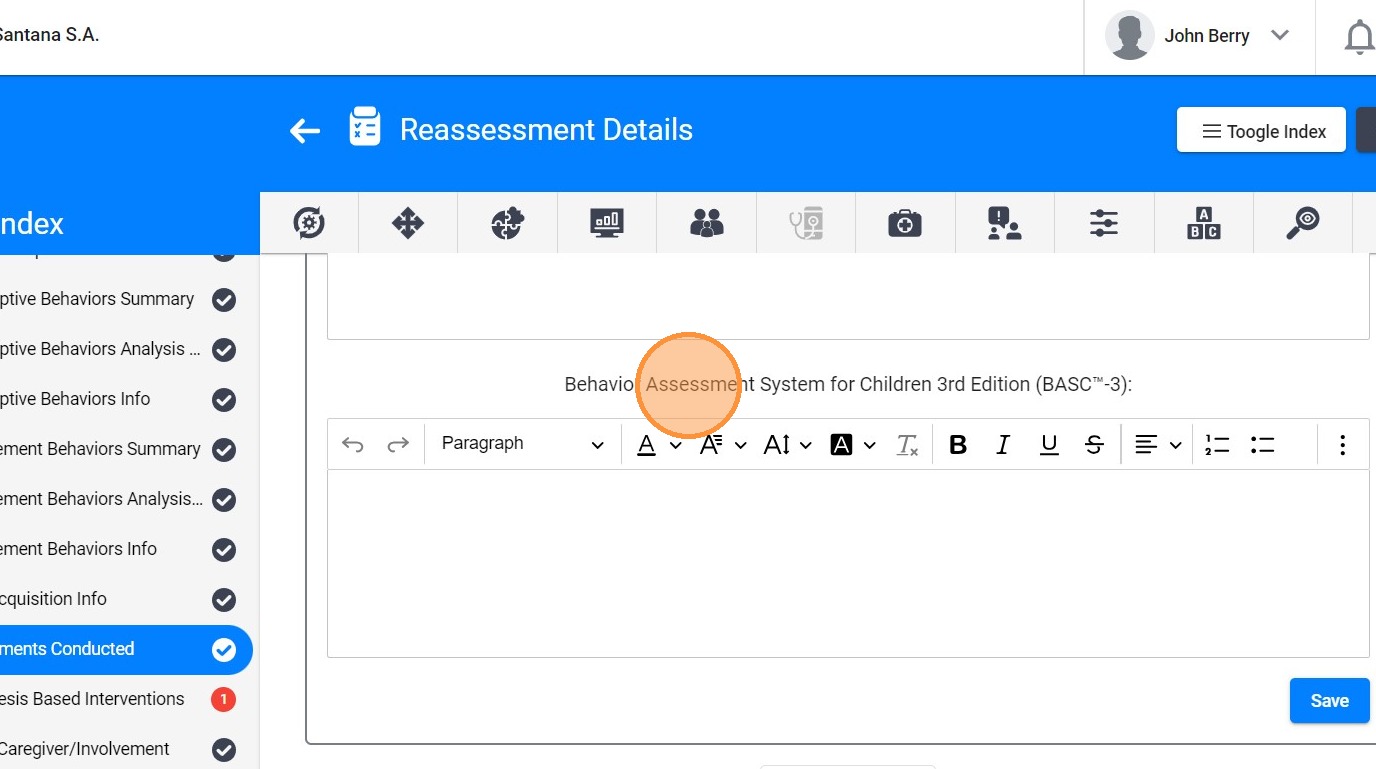
- Behavior Assessment System for Children, 3rd Edition (BASC™-3)
- Add a section for the analyst to complete the information.
- Social Skills Improvement System Rating Scale (SSIS)
- Add a section for the analyst to complete the information.
3. To include an assessment:
- Click "Edit Section"
- Click the red "+" icon.
- Click the "Enter the assessments conducted" field.
- Select the assessment
- Click "Add To List"


3.1 Direct Observation
4. When you add Direct Observation, the system generates a table with the sessions linked to the report.

3.2 ABC Data Collection
5. For ABC Data Collection, the system uses the information recorded through the ABC tool within the assessment or from the client’s profile.
This data is displayed in the report based on the selected effective date.

3.3 Stimulus Preference Assessment (SPA)
6. When you add a Stimulus Preference Assessment, the system uses the information recorded through the Preferences tool within the assessment or from the client’s profile.
This data is displayed in the report based on the selected effective date, reflecting the client’s preferences during that period.
3.4 FAST and/or MAS
7. The Functional Analysis Screening Tool (FAST) and Motivation Assessment Scale (MAS) is automatically generated by the system based on the behaviors and functions information for the client.

* Graph view
8. You can choose between the table and the graph view
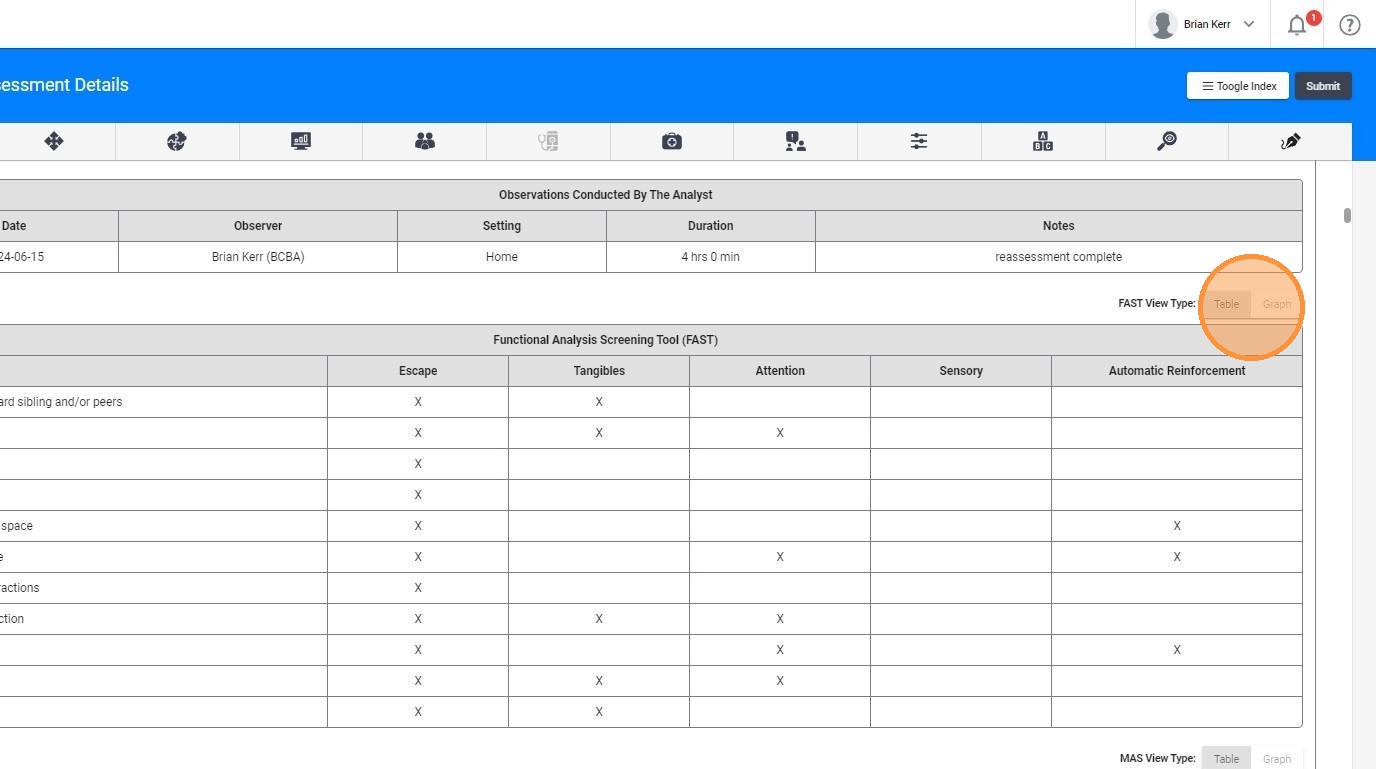
9. Select the graph view
- Enter the corresponding % values
- Save the changes

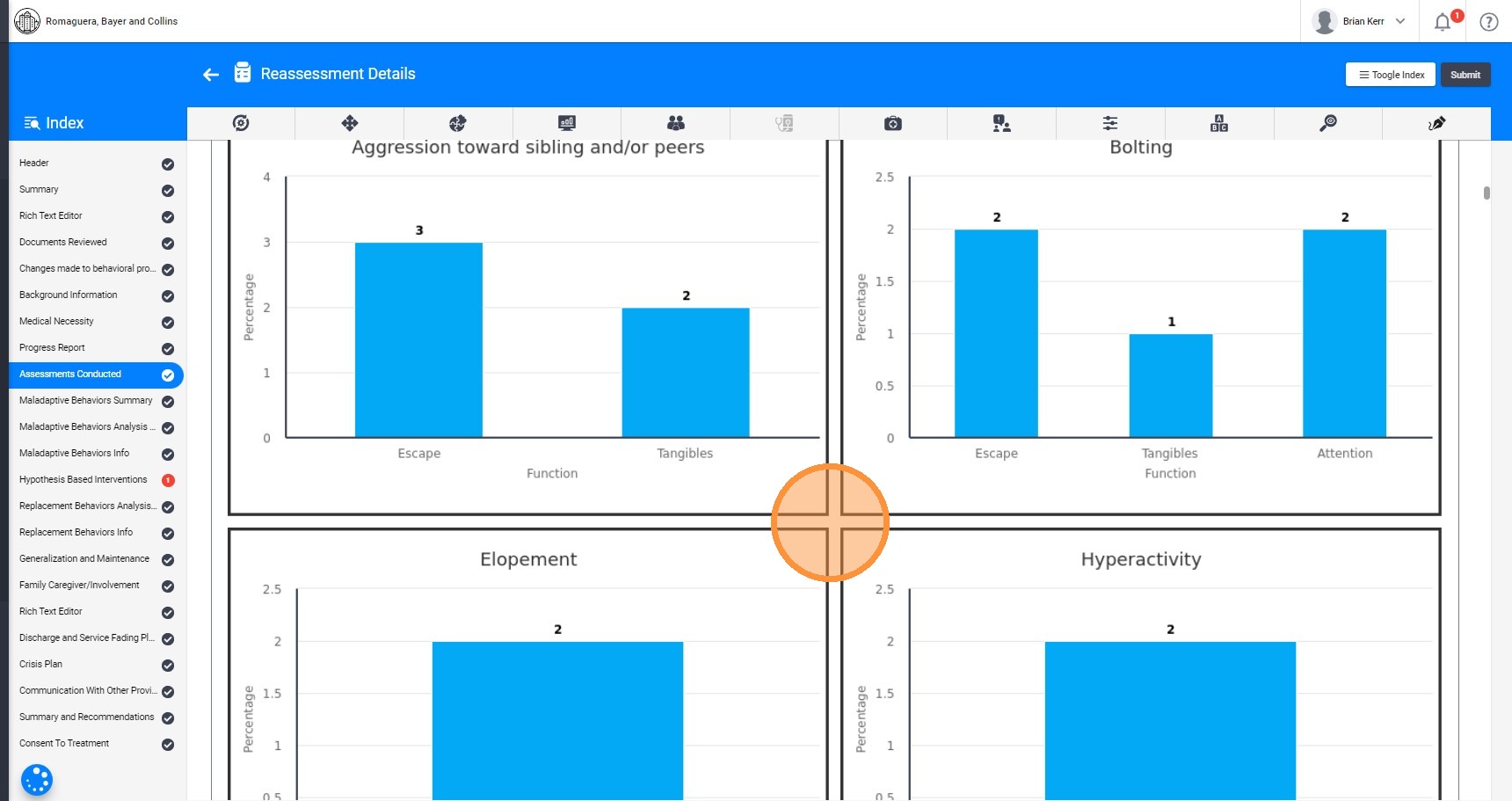
10. After saving, you should see the graphs.
3.5 Add the VB-MAPP, ABLLS-R, Vineland-3, etc.
When you add other assessments, the system generates a section labeled with the name of the assessment for the analyst to complete. This section uses a Rich Text Editor, where the analyst can enter information and use formatting tools such as tables, graphs, screenshots, and more.
11. Select the assessment you want to include in the report
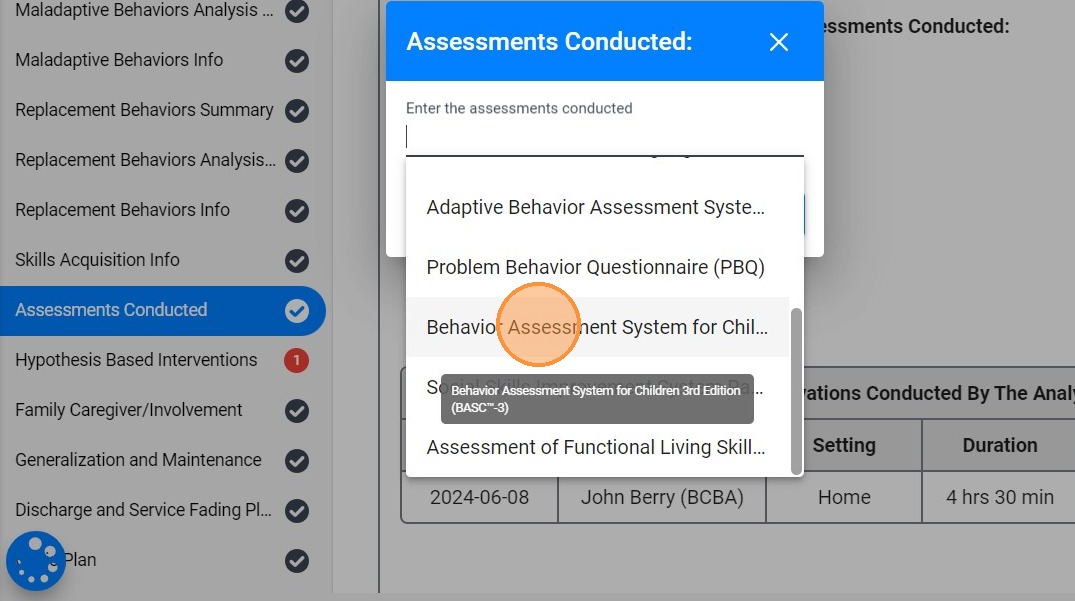
12. Click "Add To List"
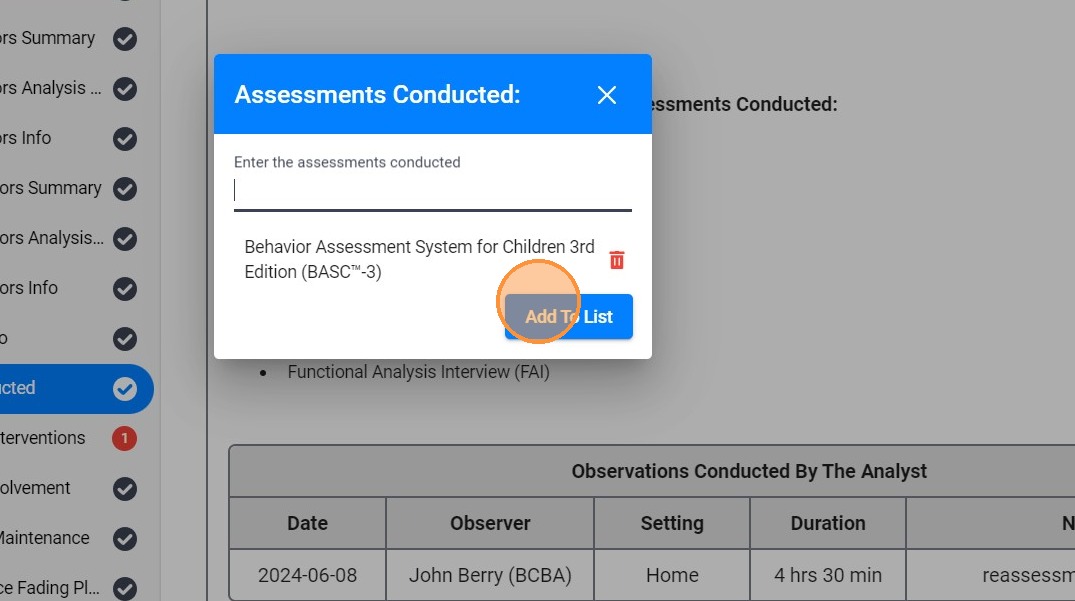
13. Then you can edit the assessment